Sunday, December 22, 2013

The Kite Runner

This beautifully written novel takes place in Kabul, Afghanistan, in the late 1900s. It is told in first person perspective of Khaled Hosseini, a privileged young teenager whose best friend happens to be his servant. His servant is a loyal, friendly, and loving boy who would do anything for Khaled, and this consequently leads to something terrible happening to Khaled's servant. Khaled witnesses this event, but, instead of speaking out, guiltily stands in silence and watches his friend slowly become more depressed, before having leaving Khaled's home forever. The story follows the rest of Khaled's life; he moves to California after the war tears up his home, he gets married but suffers a tragedy, and, after many years, he must return home to fix the mistake he made in the past.

This is a very moving book. It is not written poetically, but is written in very prose-like form. It has many sad parts to it, and several times you feel very sorry for the characters and what they go through. This book kept me hooked the whole time. I would recommend this for young adults, as there are some violent parts. All in all, this is a magnificent book. It is also a movie, so check the trailer out below!


Thursday, December 12, 2013

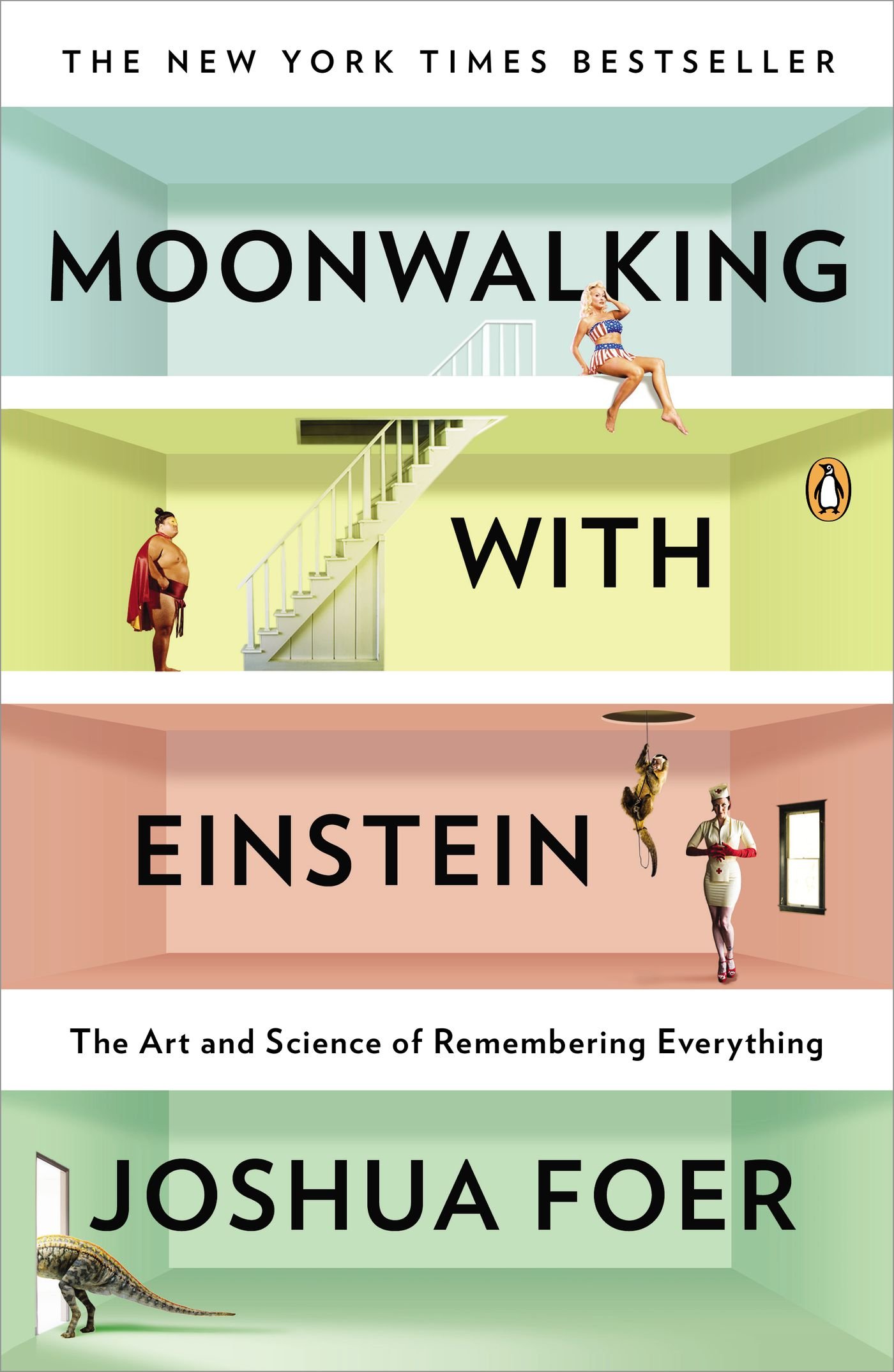
Moonwalking with Einstein

"Moonwalking with Einstein" is about a journalist who decides to enter a national memory competition. He becomes fascinated with the forgotten art of remembering and works for an entire year in order to prepare his mind for memorizing extreme amounts of numbers and words at the National Memory Competition.  In the novel he depicts all his techniques he learns from the top memory champions in the nation. This novel is a cutting-edge book that helps readers appreciate the gift we all possess but slips to often from our mind.


If you're interested in learning more about Joshua Foer and his extraordinary experience, watch the interview below.

Thursday, December 5, 2013

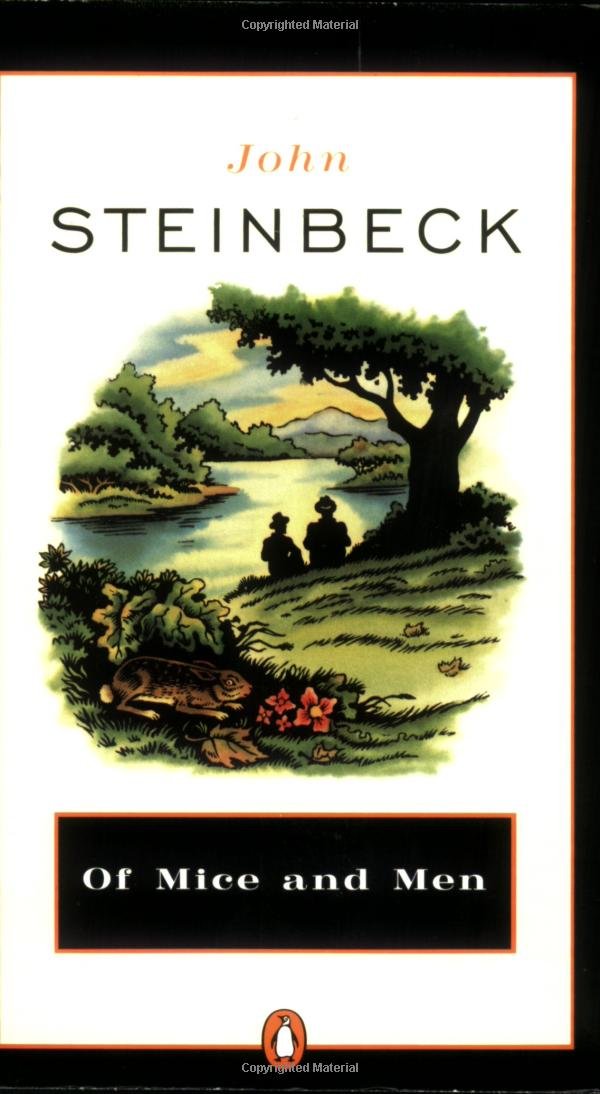
Of Mice and Men

I am currently reading "Of Mice and Men," by John Steinbeck. It is a relatively short book, so right now I am on page 58, a little more than half-way. The book is written very well. It is very interesting, a gripping tale that could almost be called a thriller. I think this is one of Steinbeck's best books. "Of Mice and Men" is about two men: George, who is small and a fast talker, and Lennie, an enormous man who thinks like a child. Together, they work hard in a vegetable field owned by a plantation, hoping one day to one an acre of land and a shack they can call home. But they face many difficulties in doing this, the biggest problem being Lennie's inability to guard against flirtatious women. But even George cannot foresee the enormous consequence Lennie's actions will have on their relationship forever.

I have really enjoyed the book so far. One of the things that I find most interesting about "Of Mice and Men" is the dialogue. The men speak in very rough, western talk. I like that the author wrote it like that because, to me, it helps me understand the story better and get more involved in it. The plot also definitely hooks you in, and the excellent writing style makes this book a pleasure to read. I predict Lennie will accidentally hurt the flirtatious woman, therefore resulting in either Lennie being killed by the husband of the flirtatious woman or George having to save Lennie again. I am very excited to see how the novel ends, and I would highly recommend it to anyone.

Wednesday, November 20, 2013

All Quiet on the Western Front

The book that I have recently started reading is called "All Quiet on the Western Front," by Erich Maria Remarque. The novel is set in the perspective of Paul Bäumer, a young soldier who has barely become an adult. Paul writes in his journal about the horrors of war: watching his comrades die, facing starvation, sickness,  and exhaustion, never being able to see his parents, and, of course, going out onto the western front. The western front is where Paul must fight through the trauma and destruction of shelling, be constantly alert of gas that would make a man painfully cough out his lungs, and watch out for the mines that would literally blow a man out of his clothes. In the beginning, Paul writes about how hopeful and carefree he and his friends were when they first joined the army. Now, they have become nothing but empty shells, only knowing how to survive and nothing else. They enter the war as boys and turn into men, but will they be able to walk out of the war at all?

On the front cover of the novel, the words "The Greatest War Novel of All Time" are written. And I agree with that statement. Although I am only a few pages in, I can already tell this book is different from other war novels. For one thing, the writing style is very interesting. It is written from the perspective of a soldier, so the views of the lieutenants, other soldiers, and the war in general is very one-sided, yet very interesting to read. The way the author wrote the novel makes it feel like you really are reading the diary of a soldier, which I liked. The reason I chose to read this book is because I have read a few war novels before, like "Rifles for Watie." This novel just seemed to be more insightful, thought-provoking, and interesting than other war novels. And I was right. As soon as I read the first page I was hooked, and I can't wait to read more of it.

Tuesday, October 29, 2013

Fahrenheit 451 (Checkpoint 6)

I was blown away from this novel. Ray Bradbury's book Fahrenheit 451 is a intruiging and thought provoking novel. It is set in the future, which is really today because the book was written in the 1950s. The story is set in a world where everything is the same; conformity is the rule. Education has been limited to just basic necessities; people are not encouraged to think independently or meaningfully, everyone lives in gray houses with no porches, and most importantly: books are burned. Books are considered horrible, nonsensical objects filled with useless information that could tip over the carefully preserved balanced that took two nuclear wars to create. Therefore, people called "firemen" go to houses that are rumored to be hiding books, and burn them down. Firemen no longer put out fires, but instead start them.

The book is centered around a particular fireman, number 451, Guy Montag. One night, after coming home from a successful night of burning hundreds of priceless novels, he meets a young girl who opens his eyes to just how empty and meaningless his life is. He starts questioning the meaning of burning books, and over the next few days goes through a series of disturbing events. Then, Guy Montag knows what he has to do.

The theme of this novel is it is better to be knowledgeable and sad than ignorant and happy. In the beginning, Guy Montag was content to just do his job of burning books.
 "Do you ever read any of the books you burn?"
He laughed. "That's against the law!"
"Oh. Of course"(Bradbury 8). 
Guy didn't question anything, so he lived comfortably in ignorance. But very early on in the novel, he meets a special girl who leads him to start questioning the world he lives in. I believe this because one of quotes from Fahrenheit 451 is "I sometimes think drivers don’t know what grass is, or flowers, because they never see them slowly. If you showed a driver a green blur, Oh yes! he’d say, that’s grass! A pink blur! That’s a rose garden! White blurs are houses. Brown blurs are cows. My uncle drove slowly on a highway once. He drove forty miles per hour and they jailed him for two days. Isn’t that funny, and sad, too"(Bradbury 10).
The main character, Guy Montag, is starting to question how drivers go see so many places and new things, yet all they see are blurs, and never question more about the blurs, or stop to see the blurs more clearly. He is beginning to open up. Midway through the book, he opens up even more, by starting to hide books that he finds, instead of burning them. One night, he cannot stand it any longer and starts reading one.
"Montag picked a single small volume from the floor.
"'Where do we begin?" He opened the book halfway and peered at it. "We begin by beginning, I guess'" (Bradbury 68).
He starts reading, and soon realizes what he has done by burning thousands of books everyday. He has gotten rid of all knowledge in the world, and he realizes how wrong that is. The novel ends with him doing something momentous that overturns the balance of his ignorant world, but the knowledge he earned, even though it created extreme difficulty for him, made him, in the end, truly happy.

Wednesday, October 23, 2013

The Last Dragon

"The Last Dragon," by is a fantasy novel centered around a young elf named Yorsh finds himself the last elf in the world. He soon realizes however, that he is part of a prophecy that foretells that how he and a dragon will save the world from its endless rain and darkness. Yorsh must travel around the world to find the last dragon and together they must break the seal on their world. The book is full of humor, sadness, adventure, and excitement. I rate it 3 out of 5. If you enjoy fantasy novels with a heart wrenching plot, then I suggest you read this novel.

Ella Enchanted

This comical book is a twist on many classic fairy tales. It's about a teenager who has no choice but to obey every command given to her. Whether it be "Put on a scarf," or "Kill yourself," Ella has to obey it. Instead of becoming docile and obedient, the curse, put on her by a foolish fairy, made her into a rebellious, humorous main character. I really enjoyed how Gail Carson Levine portrayed Ella. Instead of the childish, ignorant princesses we usually read about in fairy tales, Ella is headstrong, intelligent, brave, and sarcastic. The story is basically about her trying to break the curse. Along the way, however, she has to battle ogres, horrible commands, foolish fairies, and her stepsisters.

I can clearly see why this book won a Newberry Honor. It's such a great book to read, and it's right for all ages. It's fantastic to read on any day. Levine's sarcasm is timed perfectly, and I actually found myself chuckle a few times.

The Girl of Fire and Thorns

I am currently reading the book "The Girl of Fire and Thorns," by Rae Carson. The book is about a princess who is the chosen one. She secretly marries a king who needs her help to save his country in turmoil. But enemies want her too. Can she help the world, or will she die young, as most of the chosen do?

I am only in the very beginning, but already the book has hooked me in. From the very first page I was intrigued. Rae Carson's writing style is very well done. She is very detailed and vivid, so you can clearly see the setting or the character/scene she is describing. This novel is a fantasy book, so it's a nice change of pace of genres. I have just finished reading a historical fiction novel, so this book is a nice change. The book has won the WIlliam Morris Debut Award, and has rave reviews from many distinguished critics. I can't wait to read this book and find out what happens to Elisa, the princess, and see if she can live to fulfill the prophecy.

Tuesday, October 15, 2013

Dragonwings

Parents tell their  children to follow their dreams, but sometimes parents have unfulfilled dreams of their own.

"Dragonwings," by Laurence Yep is a personal favorite of mine that I have read countless times. The story is set in the early 1900s, and begins in China. A young boy named Moonshadow lives with his mother and grandmother, and his father works all the way in America, where he sends his family money. They struggle along without him for seven years, when one day a letter arrives. It is from Moonshadow's father, inviting him to go to America to work alongside him. Although Moonshadow knows he will not see his mother for a long time, he agrees and sets out on the difficult journey to America, which, back then, took several weeks, not including the intensive questioning he had to go through. But once he was finally in America, a whole new set of challenges arise. He must fight through the prejudice of American people not ready to accept Chinese people, the hardwork that never seemed to end, and learn an entirely new culture and language. But all this is nothing compared to the hardest challenge of all: Understanding his father, who is a complete stranger to Moonshadow, and helping his father achieve his goal: earning his wings and soaring through the air.

The story touches on many historical moments in history. The San Franciso Earthquake of 1906, the Wright Brothers' first flight, and many other important aspects to Chinese and American culture. The whole story centers around his father's desire to fly, and in the book the Wright Brothers play a huge part in it.
The Wright Brothers
 
Chinese people believe that the dragon is one of the most powerful and wise creatures on earth. In Dragonwings, Moonshadow and his father's flying contraption is christened Dragonwings, and his father has a dream about the Dragon Kingdom, which leads them to build the airplane. Airplanes back then were very skeletal looking and were controlled very simply, so Moonshadow's father's airplane probably looked similar to this:
All in all, "Dragonwings" is a fantstaic book of poetry and adventure, and I highly recommend it to all young adults who appreciate hisotry, beauty, and adventure.


Tuesday, October 8, 2013

The Secret Garden


"The Secret Garden" is a treasured classic about a sour, selfish young girl who goes to live with her hunchbacked uncle in the moorlands. In the beginning, she hates it, but gradually she becomes more immersed in the beauty of the moor and the secret her uncle has kept hidden for 10 years. The secret garden changes her into a beautiful, happy, healthy young girl. But can the secret garden help other people who are even more damaged than her?

I can't believe I haven't read this book sooner. It has been in my house all my life, and I just got around to reading it now. It's a great book. Some people may say it sounds cheesy, but in reality, once you read the book you'll find there's nothing cheesy about it. It's very well-written. But the sensory language is what really stood out to me. You have to be a fantastic author to be able to accurately describe the beauty of the moors of Yorkshire, and I think Frances Hodgson Burnett does just that. His descriptions of the garden, the moor, the main character, and the mansion are so vivd and clear you feel like you are stepping into another world when you read it. To show you what I experienced through reading, here are a few pictures of the gorgeous moors of London.


Monday, October 7, 2013

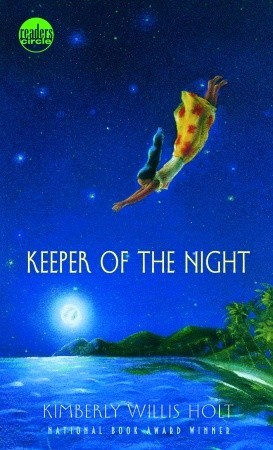
Keeper of the Night

Can you imagine having to take care of your entire family with no one to help you?

That's what Isabel has to do in the novel "Keeper of the Night," by Kimberly Willis Holt. The book is very unique. Here is a brief summary of the book.

Isabel, a young teenager around my age, lives on the small island of Guam with her single father, brother, and younger sister. Her mother killed herself and died on her knees praying. Isabel is left all alone with her grieving father, who gradually becomes more and more distant and spends all his time on the beach. Her brother has changed from the lighthearted, talented boy to a silent, depressed man who cuts himself and the wall of his bedroom. Her sister hasn't stopped wetting the bed ever since her mother died. Isabel is left to deal with the pressures of school, life, family, and grief all by herself. It is up to her to help her family deal with pain and sadness. 

The book was quite interesting. I live in a happy home. None of my family members have ever been harmed, luckily. So it was very different to read from a perspective of a girl my age whose life is completely opposite of mine. Isabel is a powerful character. She has flaws like any person, but the strength she shows when going through tragedy is very moving. 

Kimberly Willis Holt is an American writer of children literature. Some of her books include: "When Zachary Beaver Came to Town"(Which I have read), "The Water Seeker," and "Part of Me."

Sunday, October 6, 2013

The Silver Star

If you were a young kid, would you be courageous enough to defy the adult world?

"The Silver Star" by Jeannette Walls asks that question. As you may know already, Jeannette Walls is also the author of "The Glass Castle," so I had high hopes about this book. I was not disappointed. The novel is about a young girl and sister whose mother is a flighty, unstable woman who cannot take care of them. So they save up enough money to travel to their uncle's house, where they take jobs working for a "nice" man. The man does something to the older sister, which changes their lives forever. "The Silver Star" is all about a young optimistic girl trying to fight against the injustices and unfairness of the adult world. The love the sisters have for each other is very apparent throughout the entire novel and they are willing to do anything for each other. I think Jeannette Walls based this relationship off of her own relationship with her sisters. I am very glad I read "The Glass Castle" before I read this because I was able to make connections from "The Silver Star" to Jeannette Walls's life and "The Glass Castle."
The book is suspenseful and you find yourself rooting for the courageous girls, wanting them to succeed. I would recommend this book for young teenagers/young adults

To read another review on Jeannette Walls's book "The Silver Star," click here.

Tuesday, October 1, 2013

The Secret Life of Bees (Checkpoint #4)

I rate "The Secret Life of Bees" 5 out of 5 stars.

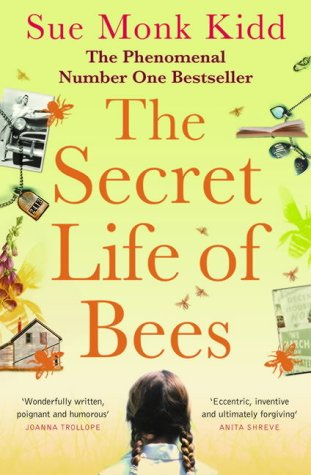
The book is about a teenager, Lily, who is living in one of the most racial discriminating states in the 1960s  ever: Georgia. She lives with her abusive father and affectionate African American maid, but is haunted by the memory of her four year old self accidentally killing her mother. She leaves her father after her maid gets beaten fore wanting to vote and together they travel all the way to a bee keeper's house, where she learns that the bee keepers there have a history with her mother and may just help Lily find peace within herself.

This book kept me hooked until the very end. I thought it was amazing. Not only is the plot unique and extremely interesting, but the writing by Sue Monk Kidd is absolutely gorgeous and vivid. The book is unlike anything I've ever read before. In the beginning, I was unsure about this book because it seemed so different and strange. But now at the end, it is one of my favorite books of all time. This book is just so powerful. It covers some many topics: Racial discrimination, religion, politics, relationships, and parental abuse. The language is very advanced. Sue Monk Kidd uses very strong diction and has a way with words. I would recommend th
is book for teenagers/young adults because there is some violence and swearing. All in all, I recommend that everyone read "A Secret Life of Bees."

Want to learn more about bees? Click here.

There's also a movie about "The Secret Life of Bees." Check the trailer out below!


Monday, September 23, 2013

Checkpoint #3: Reading Skills

Sometimes, you have to look past realism, and believe what you see. When You Reach Me by Rebecca Stead is a science-fiction book set in the 1970s. It's about a young girl who witnesses her best friend get beat up, and how it completely changed her entire life. I am only on page 96 currently, but the book is extremely enticing and I can't wait to get home and read more.

Predictions

So far, the main character, Miranda, has witnessed her best friend, Sal, get beat up for apparently no reason, and has suddenly stopped being friends with her. She makes a new friend, and discovers that her new friend has epilepsy. Miranda meets the person who beat up her best friend and discovers he is a genius. (Marcus). She also receives two notes from someone who is apparently from the future. This book is sci-fi, so I found it an appropriate book to make predictions about.

My first prediction about the book is her friend will probably suffer an epilepsy attack sometime soon, which will affect Miranda negatively. I predict this because in the text I read:
 "She was quiet.
"It's not a big deal, just that Julia said-"
"No," she interrupted. "It is sort of a big deal. I should have told you. I have epilepsy-"
"Oh."
"-and I'm not supposed to eat bread or starches. It's this crazy diet my dad read about, but it actually works. I'm usually fine. People don't even really know I have it, because for years I've hardly had any seizures at all.'"

This quote is hinting that perhaps her friend will probably suffer a seizure sometime during the book, which will probably make Miranda question herself and her actions.

My second prediction is Marcus, the guy who beat up Sal, will do something much worse to Sal than beat him up again. I believe this because in the book I read: "I could have called out to Sal at that moment. It would have been easy. He would have had an excuse to turn around and start walking away from Marcus. And then Marcus might have stopped to talk to me for a minute, and Sal would have seen that it was all okay. He could have dropped his fear of Marcus right then and there. I've thought about this a lot, because I realize it would have changed everything that happened later."

From this quote I get the feeling that Marcus will bully Sal into doing something dangerous, or severely hurt him again. The part where it says, "I've thought about this a lot, because I realize it would have changed everything that happened later," is a huge foreshadowing moment. I believe Marcus will get Sal in trouble, or even kill him.

Questions

I don't read that many sci-fi novels. Much of the time and space talk confuses me. So I had a few questions about this book so far.

My first question is why did Marcus beat up Sal? The book says: "But just as we started past the garage, someone moved away from the group. He took a big step toward me and Sal and blocked our way so that we had to stop. I looked up and saw a not-too-biggish kid in a green army coat. He made a fist that came up like a wave and hit Sal right in the stomach. Hard." This quote tells me that Marcus, for no reason, suddenly hit Sal. Is there a background story between them? Is it about Miranda?

My second question is how the mysterious notes Miranda receives will play a part in the story. One of the notes was: "This is hard. Harder than I expected, even with your help. But I have been practicing, and my preparations go well. I am coming to save your friend's life, and my own. I ask two favors. First, you must write me a letter. Second, please remember to mention the location of your house key. This trip is a difficult one. I will not be myself when I reach you."

I am coming to save your friend's life, and my own. Sal's life? Who wrote the note? I think the writer is from the future, and the time traveling experience must change him, or make him physically/emotionally different so he wouldn't be able to tell Miranda himself. The letter part is especially confusing, because if Miranda must write a letter to someone from the future, how will she give it to him? Perhaps she must give it to a younger version of the writer. I am confused about how the writer will save Sal's life, so I will definitely read on and find out.

Connections

This text can be connected to the world because since the book is set in the 1960s, there is a lot of racism against African Americans. Miranda has a friend who is African American, and so I have read several racial slurs about her in the book. I have learned in history about how African Americans were treated poorly in the 60s, so I could really relate When You Reach Me to our world history.

This text can be connected to A Wrinkle in Time. The author of When You Reach Me actually makes A Wrinkle in Time Miranda's favorite book, because they both are so similar and the book plays a huge role in the novel. Miranda lives with a single parent, Meg lives with a single parent. Both books have time travel play a huge part, and When You Reach Me bases a lot of time travel theories and connections on A Wrinkle in Time. These two books can be connected so easily that you can't read one book without the other.

This text can be connected to myself because I know what it's like to lose a best friend, especially one you grow up with. Miranda and Sal were friends since diaperhood, and I had a friend like that. But as we grew older, we grew more and more apart and drifted away. Sal's and Miranda's friendship broke apart more abruptly, but I could still see myself in their relationship.

Monday, September 16, 2013

The Yearling

"Until one has loved an animal a part of one's soul remains unawakened." -Anatole France

The Yearling is treasured classic about a young boy who finds true friendship with a stag. There are so many themes and characters to analze that I found this a perfect book to analyze.

The main character in the story, Jody, lives in the dense woods of Louisiana with his mother and father. He has no pets or siblings, but his friend Fodder-wing is constantly awakening a longing in Jody's heart by having bears, raccoons, birds, and dogs as friends. Jody dreams about having a pet for his own, and one day he finds a fawn. He and the fawn become close friends but have to suffer through several hardships. In the end, the fawn and the boy do not live happily ever after together. This first quote describes the woods where Jody rambles and wanders in often. The author describes the scene so well that you can almost feel the fine mist from the rain, how soft the sand is, and how shady and cool it is underneath the green leaves. But at the same time, you can feel a certain omnious mood, as if the author is hinting something important is coming, something bad.

"When he awakened, he thought he was in a place other than the branch bed. He was in another world, so that for an instant he thought he might still be dreaming. The sun was gone, and all the light and shadow. There were no black holes of live oaks, no glossy green of magnolia leaves, no patterns of gold lace where the sun had sifted through the branches of the wild cherry. The world was all a gentle gray, and he lay in a mist as fine as spray from a waterfall...A deer had come to the spring while he was sleeping. The fresh tracks came down the east bank and stopped at the water's edge..." (Rawlings 8).

I was transported into another world when I read this quote. Majorie Kinnan Rawlings is such a master at using descriptive words and sensory details. The novel is a very sad but beautiful book, and this quote really shows me that although the woods are gorgeous, they are hiding very dark secrets that can tear apart the bond between a boy and his deer. The text is explicitly stating that the woods had changed from being a beautiful and peaceful place to an entirely different world. Especially when it says: "The sun was gone, and all the light and shadow." This line takes away the serene feeling of relaxing in the woods and instead creates a very foreboding feeling. The deer tracks hint that Jody will soon find the fawn and befriend it, but their story will not end well.

"The sun was not far from its setting when the long-leaf pines around the Baxter clearing came into sight. They stood tall and dark against the red-gold west. He heard the chickens clucking and quarreling and knew they had just been fed. He turned into the clearing. The weathered gray of the split-rail fence was luminous in the rich spring light. Smoke curled thickly from the stick-and-clay chimney. Supper would be ready on the hearth and hot bread baking in the Dutch oven" (Rawlings 10).

Though this quote doesn't hold the quiet charm of the forest, the Baxter farm's homelike feel and warmth is very apparent through this description of the home. The way the author describes the home gives you a sense of peacefulness and stability, the safe haven from any danger. In the book, Jody is constantly bringing the fawn into the house during storms or wild animal attacks, so the house is a safe place for both Jody and his friend. The Baxter farm is the place where Jody grows up with the deer, and by just reading the quote I could tell that this was a place where he would have many fond memories with the fawn.

I could go on and on about Mrs. Rawling's masterful use of descriptive details. I could fill this page with excerpts from her novel to describe and analyze. Every quote has a hidden meaning behind it, so this is one of those books that you can really pick apart and digest thorougly.


Tuesday, September 10, 2013

Heidi

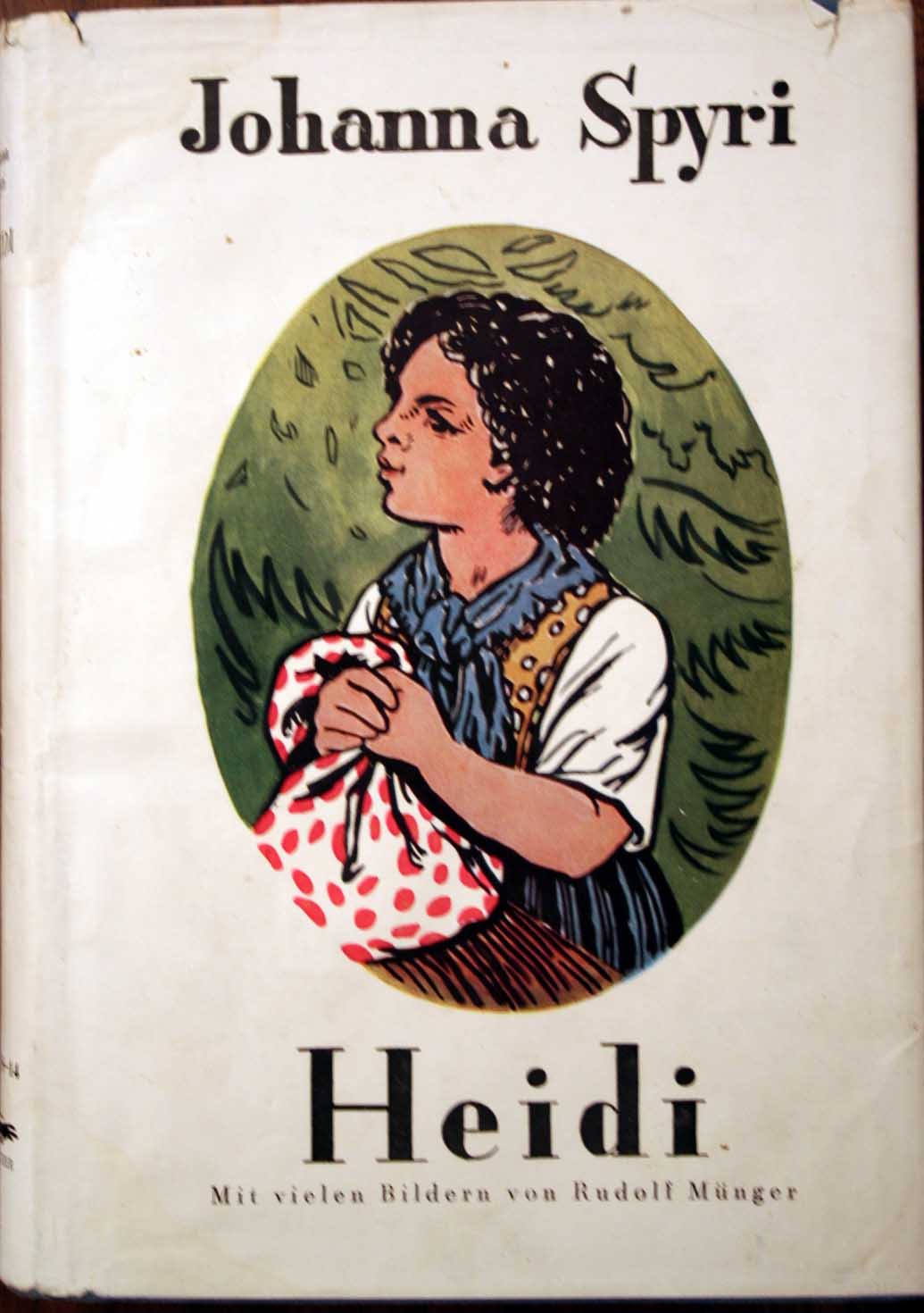
     I am currently reading the novel Heidi, by Johanna Spyri. The reason I am reading it is because I am trying to improve my knowledge of classics, and Heidi is a very famous classic. It is about a young girl who goes and lives with her 'harsh' and 'mean' grandfather in the mountains. Heidi immediately falls in love with the mountains and her uncle, who proves to be a very kind and loving person. But later in the story. Heidi gets taken away back to the city, where she hates being penned up in and starts sleepwalking and becomes ill. This is as far as I have gotten so far.

     So far, I have enjoyed this book. The author's descriptive of the setting is very detailed and beautiful. "She stared joyfully at the mountains. During the night the wind had blown away all the clouds; the dark blue sky was spreading overhead, and in its midst was the bright sun shining down on the green slopes of the mountain, where the flowers opened little blue and yellow cups, and looked up to him smiling" (Spyri 23).

      Heidi is a humorous character and I enjoy reading about her. The plot is very unique, and I have never read a book like this one. I would recommend it to teens or children with advanced reading skills because although it seems like a childish book, the vocabulary is sometimdial officials and a child would find it hard to understand. For example: "She was surprised at what she had been told about Heidi's incapacity for learning, and determined to find out more concerning this matter, not by inquiries from the tutor, however, although she esteemed him highly for his uprightness of character; she had always a friendly greeting for him, but always avoided being drawn into conversation with him, for she found his style of talk somewhat wearisome" (Spyri 97).

 The only complaint I have about the story so far is sometimes the characters are too flat or static. I am excitd to see how the story ends
Here is another review of the novel Heidi.

Tuesday, August 27, 2013

The Thief

     The Thief by Megan Whalen Turner is a fantasy book about a young thief who is thrown into prison because he stole the King's seal. He is given a chance for freedom, but only if he steals something that may not even exist. So the thief must travel to distant lands in order to try and steal what has never been stolen before and may just only be a myth. The book is all fantasy, with made-up gods and goddesses, and is set in an unknown land, in an unknown time. The plot of this book is just so complex and well-thought out that it was very enjoyable to read. The novel is very well-written, and it also has instances of humor, which makes it even better to read. This is an example of one incident of humor in The Thief.
     "In the city I had wanted to hug the sunlight and wrap it around myself like a blanket. I'd turned my body in the saddle in order to expose as much of my skin as possible to direct light. It was pleasant at first, but by the time the city was a single lump of gold stone behind us, I felt as if I were wearing a coat of dirt and dried sweat that had shrunk to be two sizes too small...The smells of prison floated down the road with me, and I think that even the horse underneath me objected. I noticed that as the sun got hotter, the two riders on either side of me moved farther and farther away" (Turner 28).
     The thief in the novel, whose name is Gen, has many qualities and layers of personality which make him a very dynamic character. He is very sarcastic, yet sensitive to what other people think of him, as you can see from the quote, when he notices that the other travelers can smell him. He also has a very humorous side to him, for example he notes that he's so dirty that probably even the horse was objecting to his smell. Gen wants to be respected for who he is: a master thief, not just some dirty prisoner. Another reason why Gen is a dynamic character, and therefore the protagonist, is he goes through a dramatic change during the story. In the beginning he is very distrustful of everyone and only thinks about escaping and himself. But as the story goes on and he starts to understand what is really happening in their world, he becomes a true hero and saves his nation. Without him, the story would have no meaning whatsoever. The book is actually part of a series, and while I have not yet read the other books of the series, I am looking forward to the day I can.


Monday, August 26, 2013

Rifles for Watie

I recently read Rifles for Watie, by Harold Keith. The book is about a sixteen-year old teen named Jeff David Bussey whose sole dream is to join the Union and fight against the South. He learns very quickly that war is not a fun game however. He sees lots of pain and sadness, and has struggles of his own. As a personal opinion of this book, it is one of my favorite books that I have ever read. The book is full of descriptive details, for example: "A double column of dusty figures rode horseback through the fort's great wooden gate. Their black campaign hats and their blue shoulders bobbed over the top of the fort's sharply pointed, close-set log palisades. As they drew closer, Jeff saw they were cavalry. Their faces were raw and swollen from the stings of horseflies and the scratches of tree branches striking them as they traveled through the woods..." (Keith 176). Keith's narrative of Jeff Bussey's life is just so realistic and informative, and the novel is written so well that the story hooks you in from the beginning. It took Mr. Keith 5 years to write this book, and I see why. There is so much Civil War information packed into this novel, and the author actually went around and interviewed several Civil War veterans. He definitely deserved the Newberry Medal awarded to Rifles for Watie.

If you want to learn more about The Civil War, click here.

Sunday, August 25, 2013

The Glass Castle

A theme of The Glass Castle is to live a good life you must be responsible. In the beginning of the novel, Jeannette Walls was very carefree and just went with everything her parents said or did.  You can see this in a quote: "We did have our scratchy army-surplus blankets, so we spread them out and lay there, looking up at the field of stars. I told Lori how lucky we were to be sleeping out under the sky like Indians. "We could live like this forever," I said.
"I think we're going to," Lori said" (Walls 18).
As you can tell, Jeannette was always very happy as a child, even when she had to run away with her parents in the middle of the night and leave all her friends and toys. This was because she did not understand that her parents were not capable of providing a safe life to her. She thought it was all just one big adventure. But as the book continues, and Jeannette grows up and has to start supporting herself and her siblings, she gradually realizes that her parents are not responsible and have no idea of how to raise children. This quote is when Jeannette confronts her mother about their poor living conditions: "We needed to take drastic measures. I was twelve by now, and I had been weighing our options, doing some research at the public library and picking up scraps of information about how other families on Little Hobart Street survived. I had come up with a plan and had been waiting for the opportunity to broach it to Mom..."Mom, we can't go on living like this," I said.
"It's not so bad," she said...
"We haven't had anything to eat but popcorn for three days," I said.
"You're always so negative," she said. "You remind me of my mother-criticize, criticize, criticize" (Walls 187).
The theme really becomes more defined with that quote, because Jeannette herself realizes that since her parents will not be responsible, they would be stuck in their broken-down house forever. The theme emerges when Jeannette reaches adolescence and they start living in Welch, because Welch was such a poor place to live in that it really opened Jeannette's eyes.

This Glass Castle Article is about Jeannette Walls answering questions about her life and her book. She talks about some key parts in her book and also mentions some things that are not written in the book.

This video is Jeannette Walls talking about how her book has impacted her life and the power within.